
How to Plan a Home Addition in Southwest Florida
A home addition is one of the most rewarding investments you can make in your property. Done well, it adds space, function, and lasting value. Done without a plan, it invites budget overruns, permit delays, and a finished space that never quite feels like part of the house.
The difference almost always comes down to planning. Here is how to do it right, in the order a successful project actually unfolds.
- 1. Start With the Purpose of Your Home Addition
- 2. Establish a Realistic Budget
- 3. Make Sure the Addition Fits Your Existing Home
- 4. Understand Your Property and Local Building Requirements
- 5. Plan With the Southwest Florida Climate in Mind
- 6. Think Through the Layout and Everyday Function
- 7. Choose the Right Contractor for Your Home Addition
- 8. Know What to Expect During Construction
- Start Planning Your Southwest Florida Home Addition
1. Start With the Purpose of Your Home Addition
Before thinking about layouts, finishes, or square footage, start with one simple question: What do you want your home addition to accomplish?
Maybe you need another bedroom for a growing family or a guest suite for visitors. You may want to expand your kitchen and living area for entertaining, add a home office, or create a larger primary suite.

Common home addition projects include:
- Primary bedroom and bathroom suites
- Guest bedrooms or in-law suites
- Kitchen expansions
- Family and living rooms
- Home offices
- Additional bathrooms
- Expanded indoor-outdoor living areas
Defining the purpose of your addition early will help guide decisions about its size, location, layout, and overall budget.
2. Establish a Realistic Budget

Once you have a vision for the project, it’s time to determine what you’re comfortable investing.
The cost of a home addition can vary significantly depending on the size and complexity of the project, structural changes, materials, finishes, and existing conditions of your home.
An addition with a new bathroom or kitchen, for example, will typically involve different considerations than adding a simple living space because of plumbing, electrical, cabinetry, and other requirements.
Your budget should account for more than the construction itself. Depending on the project, costs may include:
- Architectural and design work
- Permitting
- Site preparation
- Construction and labor
- Electrical and plumbing
- Flooring and cabinetry
- Fixtures and finishes
- Landscaping or exterior repairs
- Unexpected project expenses
Talking with an experienced contractor early in the planning process can help you understand what is realistic for your goals and budget before you get too far into the design.
3. Make Sure the Addition Fits Your Existing Home
A well-designed home addition should feel like it has always been there.
That means considering more than the interior of the new space. The exterior architecture, roofline, windows, doors, materials, and proportions should complement the existing home. Inside, details such as flooring, cabinetry, trim, lighting, and finishes can help create a seamless transition between the original home and the addition.
This is particularly important when remodeling a custom or luxury home. Adding square footage is only part of the goal. The new space should enhance the overall design, functionality, and character of the property.
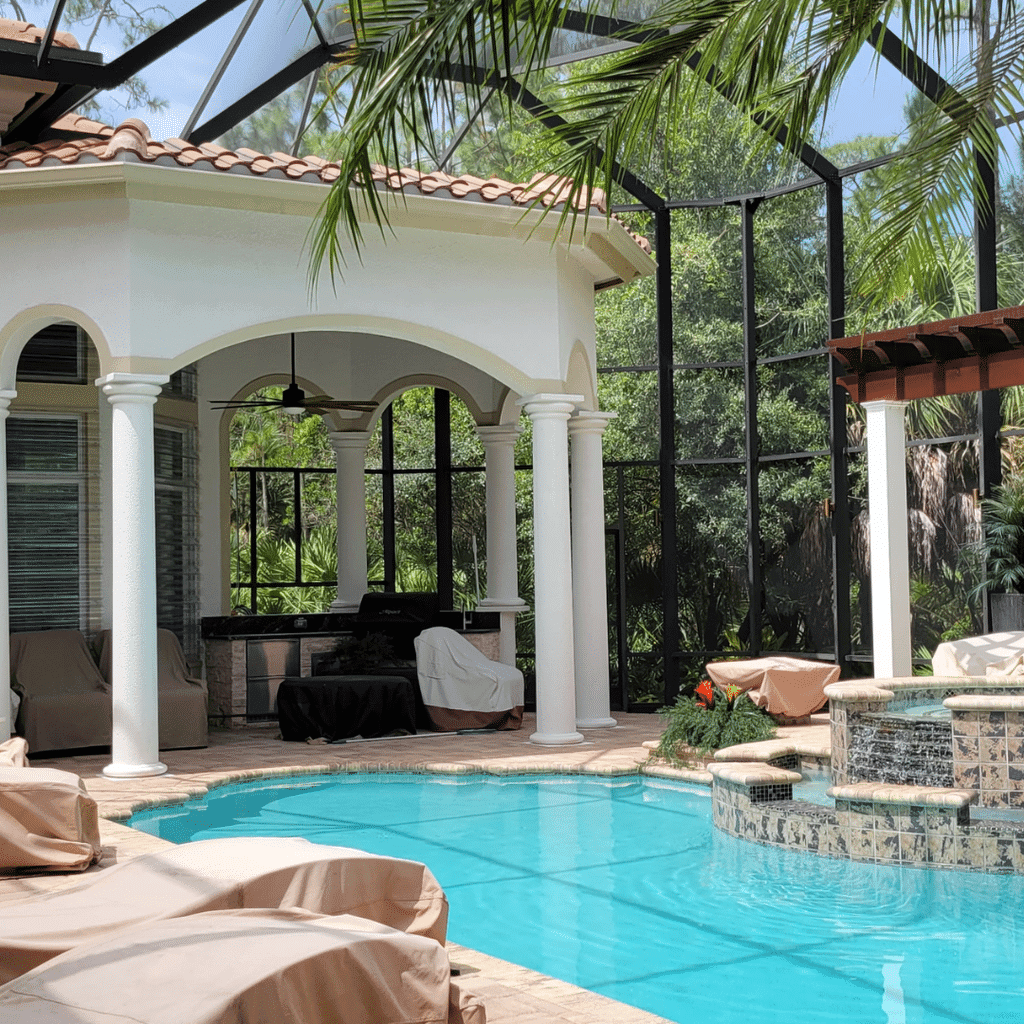
4. Understand Your Property and Local Building Requirements
Before finalizing your plans, it’s important to understand what can actually be built on your property.
Local zoning regulations, setbacks, building codes, HOA requirements, and permitting can all influence the size and location of a home addition. Existing structures, utilities, lot size, and property boundaries may also affect your options.
In Southwest Florida, homeowners also need to consider building requirements related to the region’s unique climate and weather conditions.
Working with a contractor familiar with local construction requirements can help identify potential limitations early and make the permitting and building process easier to navigate.
5. Plan With the Southwest Florida Climate in Mind

Living in Southwest Florida comes with plenty of benefits, but the climate creates unique considerations when planning a home renovation or addition.
Heat, humidity, heavy rain, strong storms, and hurricane conditions can all influence design and material decisions. Depending on your project, you may need to consider factors such as impact-resistant windows and doors, roofing, drainage, insulation, ventilation, and energy efficiency.
Your addition should also work with the way people live in Florida. Natural light, views, access to outdoor spaces, and transitions between indoor and outdoor living areas can all play an important role in the final design.
Planning for the local climate from the beginning can help create a space that isn’t just beautiful, but also comfortable and built for Southwest Florida living.
6. Think Through the Layout and Everyday Function
It’s easy to focus on how much space you’re adding, but how that space functions is just as important.
Think about how you’ll move between the existing home and the addition. Where will furniture go? Is there enough storage? Where does natural light enter the room? Will the addition affect the flow of another area of your home?

If your home addition includes a kitchen remodel, for example, the project may be an opportunity to rethink custom cabinetry, storage, countertops, lighting, and how the kitchen connects to your dining and living areas.
For a primary suite addition, you may want to think beyond the bedroom itself and consider the bathroom layout, closet space, privacy, windows, and overall flow.
The goal should be to create a space that looks great while making your home work better for the way you live every day.
7. Choose the Right Contractor for Your Home Addition

The contractor you choose can have a major impact on your experience and the final result.
When planning a home addition or other home remodeling project in Southwest Florida, look for a residential remodeling contractor with experience completing projects similar to yours and an understanding of local building requirements.
During the initial planning stages, ask questions about the contractor’s process, project timeline, communication, permitting, and how design changes are handled.
For a custom home addition, finding a contractor who understands both construction and design can be especially valuable. The goal isn’t simply to build another room, it’s to create an addition that feels intentional and cohesive with the rest of your home.
If you’re planning a home addition in Southwest Florida, Champ Inc. can help bring your vision to life. Champ Inc. recognizes that a home addition is a significant commitment of both time and money. That’s why the team works to provide fair pricing and remains committed to the project until homeowners are satisfied with the results.
8. Know What to Expect During Construction
Every home addition is different, but most projects move through several key stages.
The process typically begins with planning and design, followed by finalizing the scope of work, securing necessary approvals and permits, preparing the site, and beginning construction. From there, the project moves through structural work, mechanical systems, interior finishes, and final details before the space is ready to enjoy.

Keep in mind that adding onto an existing home can also affect areas outside the new addition. Depending on the project, walls may need to be opened, utilities relocated, flooring matched, or landscaping temporarily disturbed.
Understanding the process ahead of time can help you prepare for construction and set realistic expectations for your project.
Start Planning Your Southwest Florida Home Addition
A home addition is an opportunity to create more than extra square footage. With thoughtful planning, it can improve how your home looks, feels, and functions while giving you the space you need for the next chapter.
Champ Inc. brings together a dedicated team of project managers, designers, and master craftsmen who work toward one unified vision. With centralized communication and a trusted network of tradespeople, Champ Inc. works to keep projects on schedule, on budget, and running smoothly from start to finish.
Ready to start planning your home addition? Contact Champ Inc. to discuss your Southwest Florida home addition today.